Sharing got complicated — but it didn't die
A few years ago, splitting subscriptions meant one password in a group chat. Then came the household checks, device limits, and "who is watching?" screens. What replaced casual password sharing is a more formal system: family plans with invited members, official extra-member slots you pay for, and duo tiers for couples. The savings are still real — a family music plan split six ways costs each person less than a third of an individual plan — but now the sharing needs actual bookkeeping, because real money changes hands every month.
Step 1: check what each service actually allows
Before splitting costs, know what you're splitting. As of 2026 the landscape roughly looks like this — but plans change often, so check the service's own household rules before you commit:
- Video streaming: most major platforms restrict accounts to one household, but sell official extra-member slots. If your group doesn't live together, the extra-member price — not the full plan price — is the number to split.
- Music: family plans typically allow five or six members, and enforcement is looser — usually a same-address declaration.
- Cloud storage and password managers: family tiers are explicitly designed for invited members, wherever they live. The easiest category to share legitimately.
Splitting a plan the service will eventually break up isn't a bargain — it's a future argument with a refund problem attached.
Step 2: decide the owner's share
Every shared plan has an owner: the person whose card gets charged. The owner does real work — they front the money, absorb surprise price hikes until the group renegotiates, chase late payers, and handle the admin when someone joins or leaves. A small owner discount reflects that fairly. The common pattern: divide the price by the number of members, round the owner's share down, and split the remainder evenly. On a $23 plan with four people, the owner pays $5 and the others pay $6 each. Nobody misses the dollar; everybody values the reliability.
Step 3: pool everything into one monthly settle-up
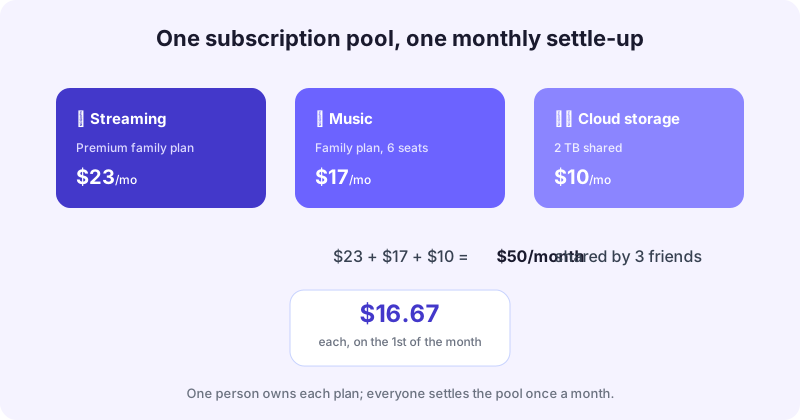
The mistake most groups make is settling each subscription separately — four services means twelve tiny payments flying around every month, and inevitably someone misses one. The better system is a pool, exactly like a shared household: list every plan, its price, and its owner; total it; divide; and settle the difference once a month on a fixed date.
Example: three friends share streaming ($23, owned by Priya), music ($17, owned by Marco), and cloud storage ($10, also Priya). The pool is $50, so each owes $16.67. Priya already paid $33 and Marco $17, so the third friend simply pays Priya $16.33 and Marco $0.33 — or, more sensibly, the group lets Spllito's subscription splitter net it into the fewest payments.
Annual plans: collect up front
Annual billing is cheaper per month but riskier for the owner — they're floating eleven months of everyone else's money. Two workable rules: divide the annual price by 12 and fold it into the monthly settle-up, or collect each member's full-year share up front. Up-front collection is blunter but safer; monthly folding is friendlier but means the owner eats the loss if someone ghosts in March. Pick based on how long the group has been stable.
When someone leaves
People move, couples merge plans, budgets change. Agree on the exit rule the day the group forms: the leaver pays a prorated share of the current cycle, loses access the same day, and the split re-runs among whoever remains. If the plan only makes sense at full headcount (a six-seat family plan with six members), the group also agrees on a notice period — usually one billing cycle — so replacements can be found.
Roommates or partners? Fold subscriptions into your regular household settle-up instead of tracking them separately — our roommate expense tracker and couples expense calculator handle recurring costs alongside rent and groceries.
Keep it no-drama: three habits
- One list, visible to everyone. A pinned note with each plan, price, owner, and renewal date kills the "wait, what am I paying for?" conversation.
- Fixed settle-up date. The 1st of the month, every month. Predictability is what prevents chasing.
- Re-check prices twice a year. Subscription prices creep. A five-minute audit in January and July keeps the split honest — and usually finds one service nobody uses anymore.
If you're wondering why we recommend running this through a calculator with no account instead of another subscription-tracking app — that's a genuine philosophy, and we wrote about it in why no-signup bill splitters win.
Frequently Asked Questions
Is it still allowed to share streaming accounts with friends?
It depends on the service. Most streaming platforms now restrict sharing to one household but sell official extra-member slots; music and cloud family plans often allow invited members more freely. Check each service's current household rules before splitting costs on it.
Should the plan owner pay less than everyone else?
A small discount for the owner is reasonable — they front the card, absorb surprise price hikes, and do the admin when someone joins or leaves. Many groups round the owner's share down and split the remainder evenly.
How do we split an annual subscription?
Divide the annual price by 12 and fold it into a monthly settle-up, or collect each person's full-year share up front. Up-front collection protects the owner if someone drops out in month three.
What happens when someone leaves the group mid-cycle?
Prorate their final month by days used, remove their access the same day, and re-run the split among the remaining members. Agreeing on this rule when the group forms avoids the awkward conversation later.
What's the easiest way to track shared subscriptions?
Keep one list of every shared plan, its price, and its owner. Once a month, run the totals through a free tool like Spllito's subscription splitter and settle on a fixed date — one payment per person instead of a dozen tiny transfers.